
08 / Aldar
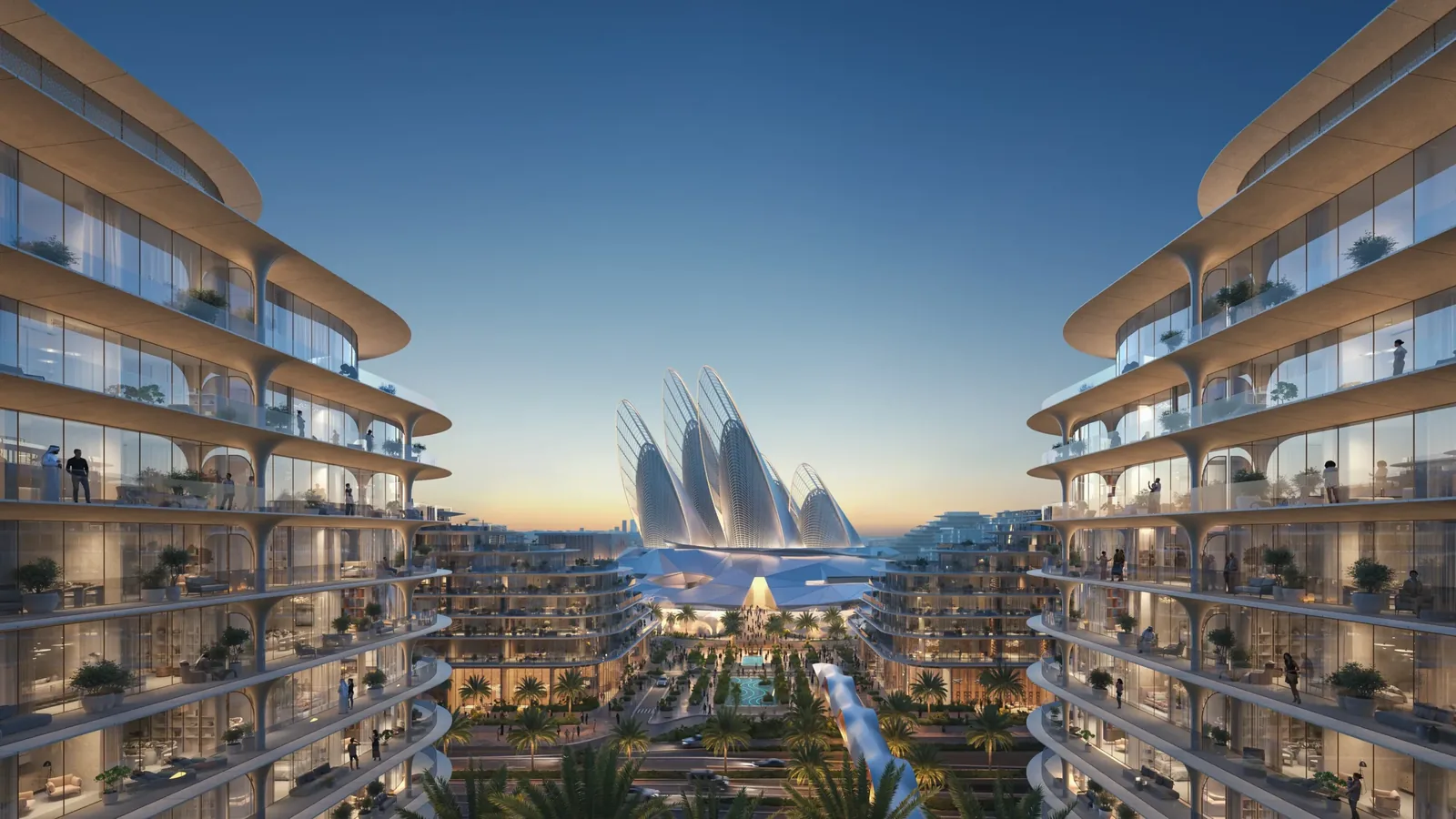
Saadiyat Grove by Aldar
The only island in the Gulf master planned around museums, and the piece that sits in the middle of them.
Saadiyat is the only island in the Gulf that was planned around culture before it was planned around anything else. The Louvre Abu Dhabi has been open since 2017. Zayed National Museum and Guggenheim Abu Dhabi sit on the same stretch of sand. The museums came first and the addresses arrived afterwards, which is the opposite of how almost every waterfront in this region was built.
Saadiyat Grove is the piece in the middle, and the first thing to understand about it is that it has no single architect. It was never meant to. Aldar commissioned the district the way a city gets built rather than the way a tower gets built, and the result is a set of names most buyers never hear.
AtkinsRéalis drew the walkable ecosystem for Aldar and the Department of Culture and Tourism: the connective tissue that ties the museums to the residences, the retail and the hotels, with shaded, desert adapted infrastructure so that walking here is possible for more of the year than you would expect. ICON handled the landscape architecture and the climate and sustainability work for The Grove, including the plot that faces Zayed National Museum.
Inside the district, the individual buildings carry their own signatures. Baccarat Residences Saadiyat is by Sou Fujimoto, the Japanese architect behind the Serpentine Pavilion and the Grand Ring at Expo 2025 Osaka: two white undulating towers, with interiors by Studio PCH. The Row Saadiyat is by BIG, Bjarke Ingels Group, conceived as a walkable boutique quarter rather than a block. The Arthouse carries interiors by DiLeonardo.
That is an unusually dense concentration of design authorship for one district, and it is deliberate. When five practices work a single master plan, a place stops repeating itself. You get streets that change character every hundred metres, which is the thing that makes people walk instead of drive.
Underneath the architecture there is a rule. Every building has to meet Abu Dhabi's Estidama Pearl standards, a local sustainability code with teeth: water, materials, cooling, orientation to the sun. It is one of the reasons service charges in this emirate behave the way they do over a ten year horizon.
The first phase alone carries 606 apartments with around two hundred shops and places to eat at street level.
Culture is a slow amenity. It does not spike a market, it holds one. The people who move here are usually moving for work tied to the district itself: the museums, the universities, the foundations, the galleries. That gives the rental base a shape closer to a European capital than to a resort, which is to say less seasonal and less dependent on anybody's holiday calendar.
Abu Dhabi spent the last two years turning into a market people read about rather than a market people drove past. Saadiyat is where that change is most visible, and Saadiyat Grove is the part of it you can live in.
- Developer
- Aldar Properties
- Where
- Saadiyat Cultural District, Saadiyat Island, Abu Dhabi
- District master planning
- AtkinsRéalis, for Aldar and the Department of Culture and Tourism
- Landscape
- ICON
- Baccarat Residences Saadiyat
- Sou Fujimoto, interiors by Studio PCH
- The Row Saadiyat
- BIG, Bjarke Ingels Group
- The Arthouse
- Interiors by DiLeonardo
- Type
- Apartments with retail and leisure at street level
- First phase
- 606 apartments and around 200 retail units
- Standard
- All buildings to Abu Dhabi's Estidama Pearl
- Neighbours
- Louvre Abu Dhabi, Zayed National Museum, Guggenheim Abu Dhabi
- Ownership
- Aldar's top two shareholders are Alpha Dhabi and Mubadala